
When a couple begins exploring fertility treatment options, two procedures usually take centre stage—Intrauterine Insemination (IUI) and In Vitro Fertilization (IVF).
Both the treatments aim to achieve pregnancy, the decision between them is never one-size-fits-all. Rather it is affected by multiple medical factors including sperm quality, age of the mother, hormonal equilibrium, and existing reproductive issues. Dr Puneet Rana Arora expresses
Understanding these factors can help couples feel informed, confident, and reassured as they move forward on their fertility journey.
The Role of Sperm Health
One of the most critical determinants in choosing between IUI and IVF is sperm count and motility.
Dr Puneet Rana Arora, Gynaecologist & IVF Expert at CIFAR IVF Centre, Gurugram, explains:
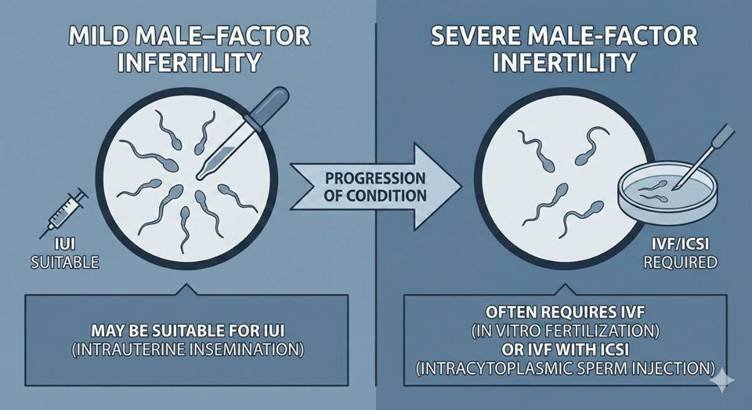
“IUI requires that sperm be able to reach and fertilize the egg on their own—with just a little assistance. For this reason, doctors usually recommend IUI only when sperm count and motility are mildly to moderately low. When sperm count is severely low or sperm movement is abnormal, IVF becomes a better option since fertilization occurs in the laboratory. In some cases, we even use ICSI, where a single sperm is injected directly into the egg, to improve success rates.”
In short, mild male-factor infertility may be suitable for IUI, whereas severe male-factor infertility often requires IVF or IVF with ICSI.
Maternal Age and Fertility Outcomes
A woman’s age plays a vital role in determining treatment success.
- Women under 35 years with regular ovulation and open fallopian tubes are often advised to begin with IUI. It is less invasive, more affordable, and can be effective in early fertility care.
- Once you reach 37, the chances of success with IUI drop notably because of a decrease in both the quality and quantity of eggs.
In these cases, IVF treatment is often the most effective solution because it lets you
- Produce multiple eggs,
- Identify the healthiest embryos, and
- Possibly become pregnant in fewer treatment cycles.
Hormonal Balance and Ovulation Patterns
Hormonal health is another important consideration.
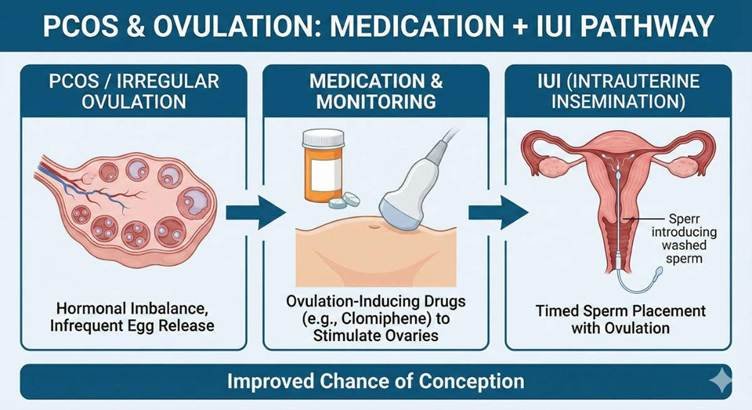
- In another case, women with PCOS/PCOD or irregular ovulation may respond well to ovulation-inducing medications combined with IUI (Intrauterine Insemination).
- Women with lower ovarian reserve or hormonal issues affecting egg quality might find more benefits in IVF (in vitro fertilization) therapy, as it provides enhanced medical oversight and improves your rate of success.
Underlying Reproductive Conditions
Some certain medical conditions strongly influence the choice of treatment:
- Blocked or damaged fallopian tubes
- Severe endometriosis
- Genetic disorders or recurrent pregnancy loss
In such cases, it is often recommended that IVF (in vitro fertilization) be considered, as it navigates anatomical challenges and enables the use of advanced methods like genetic testing (PGT) to enhance success rates.
Choosing the Right Path for Individuals or Couples for Fertility Treatment in Gurgaon
The decision between IUI and IVF really depends on what treatment fits best with the couple’s unique medical condition, rather than determining which one is better.
Fertility specialists at CIFAR IVF Centre, Gurugram carefully evaluates your:
- Your sperm quality
- Your maternal age
- Hormonal and ovulatory function working properly or not
- And last, your overall reproductive health condition
This personalized approach ensures the highest possible chances of a healthy and successful pregnancy.
Dr Puneet Rana Arora – Expert Guidance Makes the Difference
At CIFAR IVF Centre, fertility care is guided by evidence-based medicine, advanced technology, and compassionate counselling. With expert evaluation by Dr Puneet Rana Arora, couples receive clarity, confidence, and a treatment plan designed specifically for them—because every fertility journey deserves a personalized path to parenthood.
