Medically Reviewed
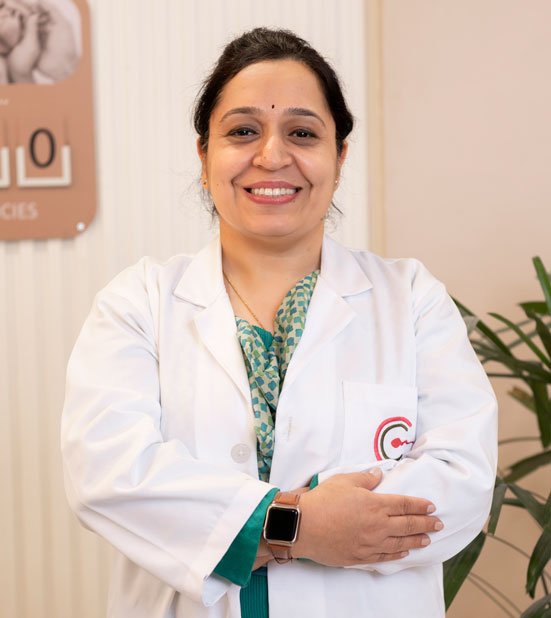
By Dr. Puneet Rana Arora : Founder & Director, CIFAR — Centre for Infertility & Assisted Reproduction, Gurugram FRCOG (Royal College of Obstetricians & Gynaecologists, UK) | MSc Reproduction & Development, University of Bristol, UK
Last Review Date : 21 September, 2026
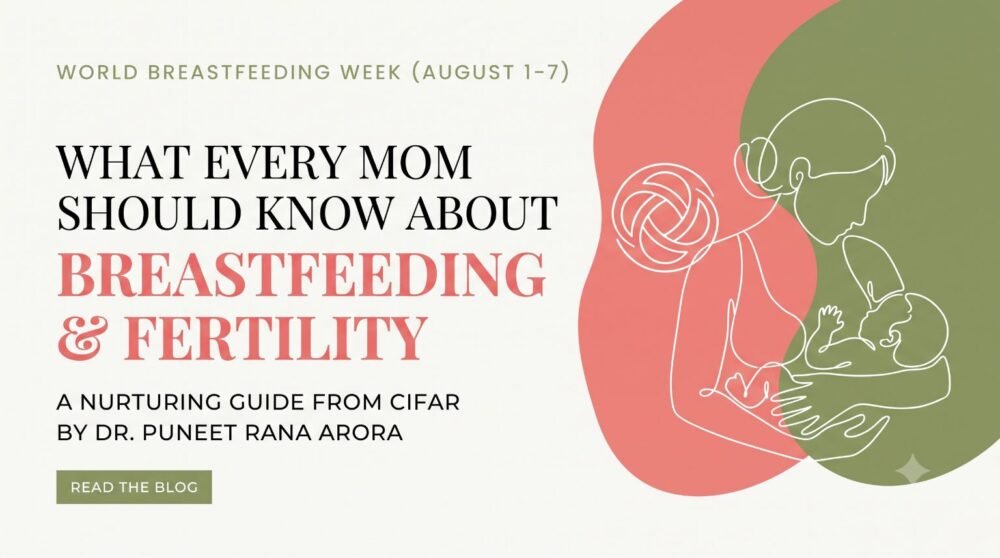
Every August, as the world marks World Breastfeeding Week (August 1–7), mothers everywhere are reminded of just how powerful breastfeeding is — not only for a baby’s health, but for a mother’s own body. One question that comes up again and again in our consultations at CIFAR is this: “Can I get pregnant while I’m breastfeeding?“ and, just as often, “Will breastfeeding affect my fertility treatment?”
The answers sit at a fascinating intersection of hormones, biology, and timing — and understanding them can help mothers make informed choices, whether they’re hoping to space their next pregnancy naturally or planning to return to fertility treatment.
The Hormonal Link: How Breastfeeding Affects Fertility
Breastfeeding doesn’t just nourish a baby — it sends a continuous stream of signals to a mother’s brain. Each time a baby suckles, nerve signals travel from the breast to the hypothalamus, which in turn changes the hormones released by the pituitary gland. The result is a rise in prolactin, the hormone responsible for milk production.
High, sustained prolactin levels suppress the normal pulsing of GnRH (gonadotropin-releasing hormone), which in turn reduces LH (luteinizing hormone) release. Without an adequate LH surge, the ovaries don’t release an egg — so ovulation is paused. This natural, temporary infertility is known as lactational amenorrhea, and it’s the biological basis of the Lactational Amenorrhea Method (LAM) of contraception.
The three conditions for LAM to work
Recognized by the World Health Organization as a legitimate, effective method of birth control, LAM only works reliably when all three of the following are true:
- The baby is exclusively breastfed (no formula, water, or solid food)
- Menstrual periods have not yet returned
- The baby is under six months old
When all three conditions are met, LAM is considered roughly 98% effective — comparable to many hormonal contraceptives. The moment any one of these conditions changes (periods return, the baby starts solids, or crosses six months), fertility can return quickly, sometimes even before the first period arrives, since ovulation typically precedes menstruation.
Common Myths, Cleared Up
- “I’m breastfeeding, so I can’t get pregnant.” Not necessarily true beyond the LAM window. Fertility can return silently — ovulation happens before the first postpartum period, so a mother can conceive without any warning sign.
- “My period hasn’t returned, so I’m definitely not ovulating.” Partial or irregular breastfeeding (night feeds only, longer gaps, introducing solids) can allow ovulation to resume even without a period.
- “There’s a fixed timeline for fertility to return.” There isn’t. Some mothers ovulate within weeks of delivery; for others, especially those who breastfeed frequently and exclusively, it can take many months to over a year. Frequency and intensity of feeding — not just duration — drive how long lactational infertility lasts.
Breastfeeding While Pursuing Fertility Treatment
For mothers who are breastfeeding a younger child while hoping to conceive again — sometimes with the help of IVF, IUI, or ovulation induction — the picture is more nuanced.
Elevated prolactin can make it harder for the ovaries to respond to fertility medications, and in some cases can delay or complicate ovulation induction. This doesn’t mean breastfeeding and fertility treatment are automatically incompatible, but it does mean the approach has to be individualized.
A few practical points worth knowing, drawn from clinical experience at CIFAR under the guidance of Dr. Puneet Rana Arora, Founder & Director of CIFAR and a UK-trained reproductive medicine specialist with over two decades of experience:
- There’s no one-size-fits-all rule on weaning. Whether a mother needs to reduce or stop breastfeeding before starting treatment depends on her prolactin levels, ovarian response, and the specific protocol being used — not on breastfeeding status alone. It is advisabel to stop breast feeding before planning any kind of fertility medications.
- Hormone monitoring matters early. A baseline prolactin and ovarian reserve assessment helps the treating specialist judge whether lactation is likely to interfere with stimulation before medications are even started.
- Gentle step-down works better than abrupt weaning for many mothers. Where reducing breastfeeding is advisable, gradually cutting frequency (rather than stopping overnight) is usually easier on both mother and baby, and easier to time against a treatment cycle.
- Timing the cycle to feeding patterns can help. For mothers who are only partially breastfeeding, treatment can sometimes be planned around natural dips in prolactin rather than requiring full cessation.But still recommended to completely stop breast feeding before planning any fertility medications
- This is a conversation, not a checklist. Because every mother’s feeding pattern, hormone profile, and treatment plan differ, this is exactly the kind of decision best made with a fertility specialist rather than through general guidelines alone.
The broader philosophy at CIFAR — evidence-based, individualized care rather than rigid protocols — applies especially here, where a mother’s choices around breastfeeding and family planning are deeply personal.
World Breastfeeding Week 2026: Data & Important Facts
This year’s World Breastfeeding Week (August 1–7, 2026) carries the global theme “Breastfeeding for a Sustainable Start in Life: Strengthen What Works,” set by the World Alliance for Breastfeeding Action (WABA) in partnership with WHO and UNICEF. The focus for 2026 is less about raising awareness from scratch and more about strengthening what already works — scaling proven support systems like skilled counselling, workplace protections, and baby-friendly healthcare facilities.
Some key global facts worth knowing:
- ~48% of infants under six months worldwide are now exclusively breastfed — up from just 37% in 2012, according to WHO and UNICEF data.
- The global community is working toward the World Health Assembly’s 2030 target of 60% exclusive breastfeeding for infants under six months.
- South Asia currently has the highest exclusive breastfeeding prevalence of any region, at around 60%, per UNICEF data.
- Continued breastfeeding at one and two years of age has also risen by roughly 10 percentage points over the past five years globally.
- Despite this progress, only about 40% of countries have collected exclusive breastfeeding data in the past five years, and three-quarters of countries still lack systems to protect breastfeeding during emergencies or crises.
- Used correctly under the three Bellagio criteria, LAM carries a pregnancy risk of less than 1–2% in the first six months postpartum — making it one of the most accessible, cost-free methods of family spacing available to new mothers.
The Takeaway
Breastfeeding and fertility are deeply connected — but that connection looks different for every mother. For some, lactational amenorrhea offers months of natural, effective family spacing. For others, especially those hoping to conceive again with medical support, breastfeeding is just one factor among several that a fertility specialist will weigh alongside hormone levels, ovarian reserve, and treatment goals.
If you’re breastfeeding and thinking about your next pregnancy — whether naturally or with fertility support — the most useful step is a personalized consultation rather than relying on generic timelines. The team at CIFAR, led by Dr. Puneet Rana Arora, works with mothers at exactly this crossroads every day, helping them plan the next chapter of their family on their own timeline.
This article is for general informational purposes and is not a substitute for personalized medical advice. If you have questions about breastfeeding, family planning, or fertility treatment, please consult your gynaecologist or a fertility specialist.
Sources:
- World Health Organization (WHO); https://data.who.int/dashboards/nutrition/global-nutrition-targets-2030?m49=356
- UNICEF Data & Global Breastfeeding Scorecard 2025; – https://data.unicef.org/topic/nutrition/breastfeeding/
- World Alliance for Breastfeeding Action (WABA);
- Global Breastfeeding Collective. https://www.globalbreastfeedingcollective.org/documents/global-breastfeeding-scorecard-2025
https://www.cdc.gov/contraception/hcp/usmec/lactational-amenorrhea-method.html